Monitoring Automated
Temperature, pH and conductivity logged around the clock, plus every outlet state and power draw.
This is not a finished showcase. It is the complete record of the build: the setup, the mistakes, the measurements, what changed, and what comes next.
This aquarium has been torn down and rebuilt several times. Each version taught me something, but almost none of it was recorded well enough to carry forward. Equipment choices, plant failures, lighting changes and maintenance decisions survived mostly as impressions, and a handful of photographs.
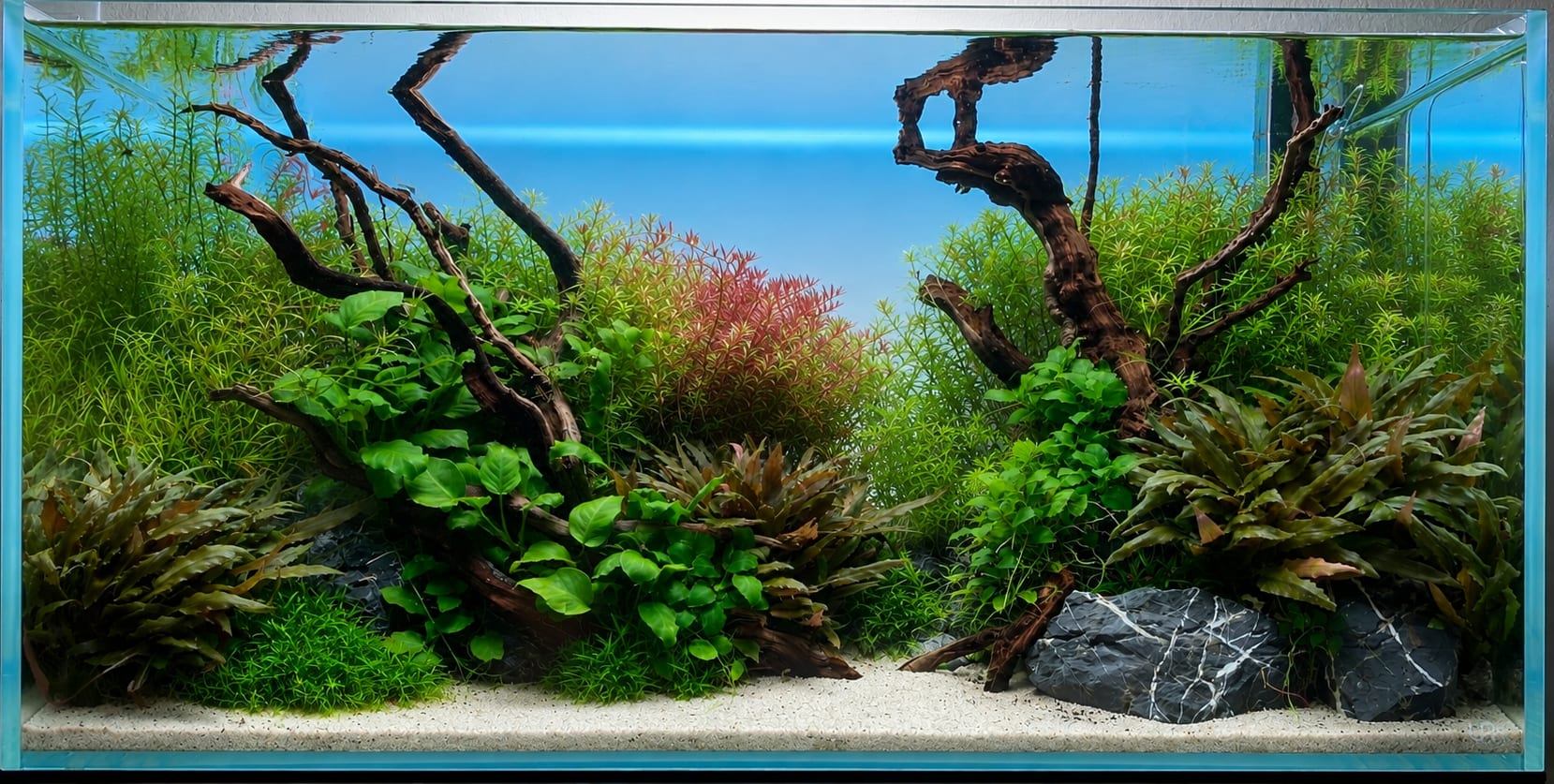
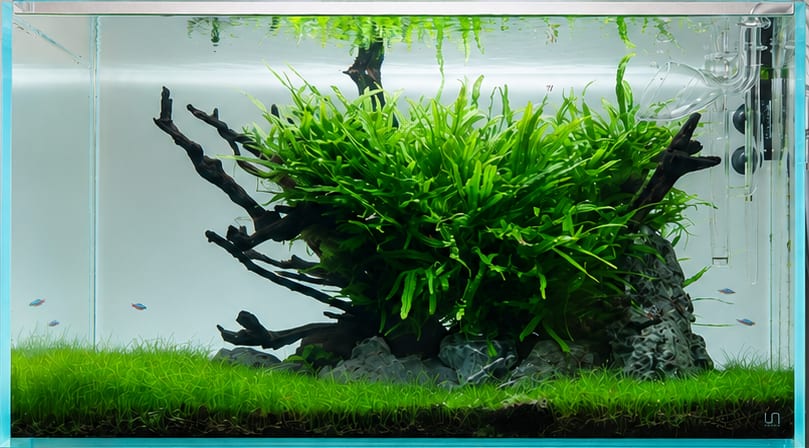
Both earlier layouts are hardscape. The wood and the stone set the composition, and the plants are grown around a structure that already exists. Years of building them is the reason the current tank is what it is, and the reason it is a departure.
A Dutch layout has no wood and no stone. There is nothing holding the composition up except plant groups, their colors and the discipline of trimming them into shape. That change is what made the light start to matter enough to measure: hardscape does not care whether the ends of the tank are dim, and nineteen plant streets do.
This one is different in one other way. This time the tank keeps a record.
Nineteen plant streets, no wood and no stone. Photographed on the 8th of August 2026, mid-photoperiod, with the room lights off and shot through the front glass, under the same conditions every published photograph here is taken under, so they can be compared to each other rather than admired one at a time.
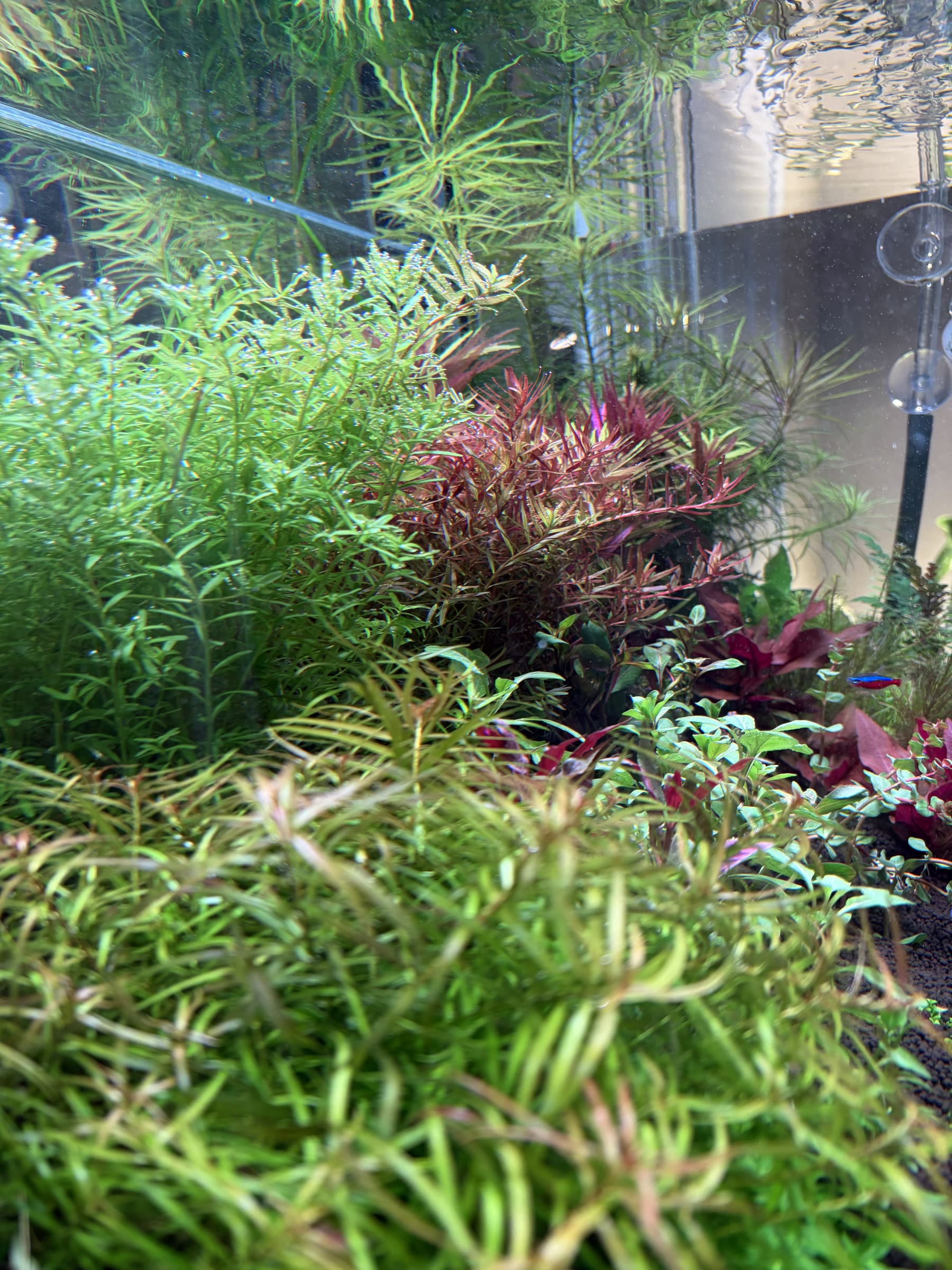
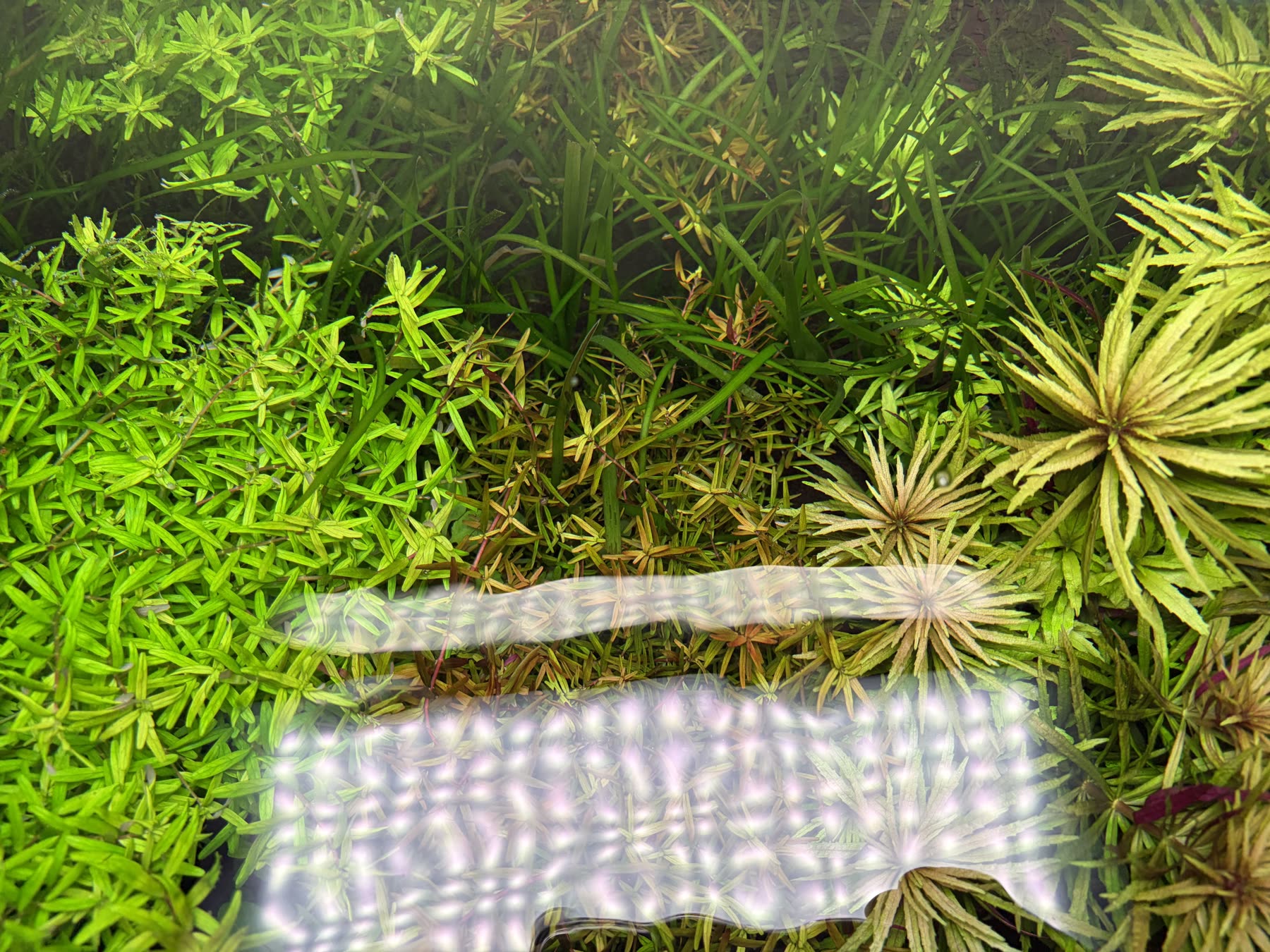
The current aquarium is a nineteen-species Dutch-inspired street layout in a 90P. It was planted on fresh ADA Amazonia over Power Sand and started with the usual problem of an active substrate: the tank looked finished long before the water was stable.
The early weeks were dominated by ammonia testing, heavy water changes, plant adaptation and the slow work of establishing shape.
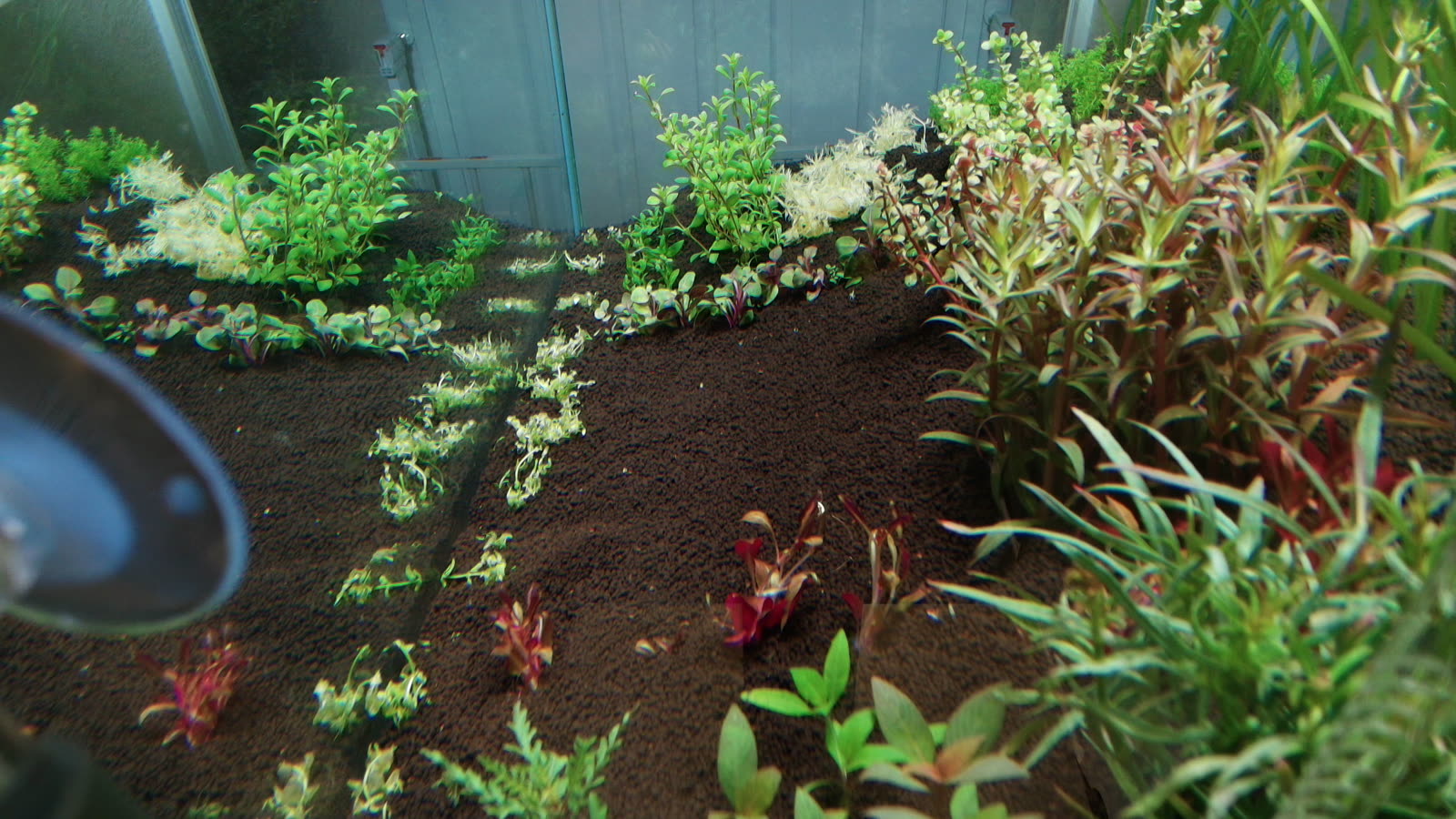 Planting week
Every species and the light measured at it · The measured ammonia curve · The tank now
Pearl is the software behind the tank. It reads the controller, probes and maintenance history, and turns them into a record I can inspect later.
Continuous logging came first. Automation came afterward.
That order matters. Automating a system before understanding what it is doing only makes mistakes repeat more consistently.
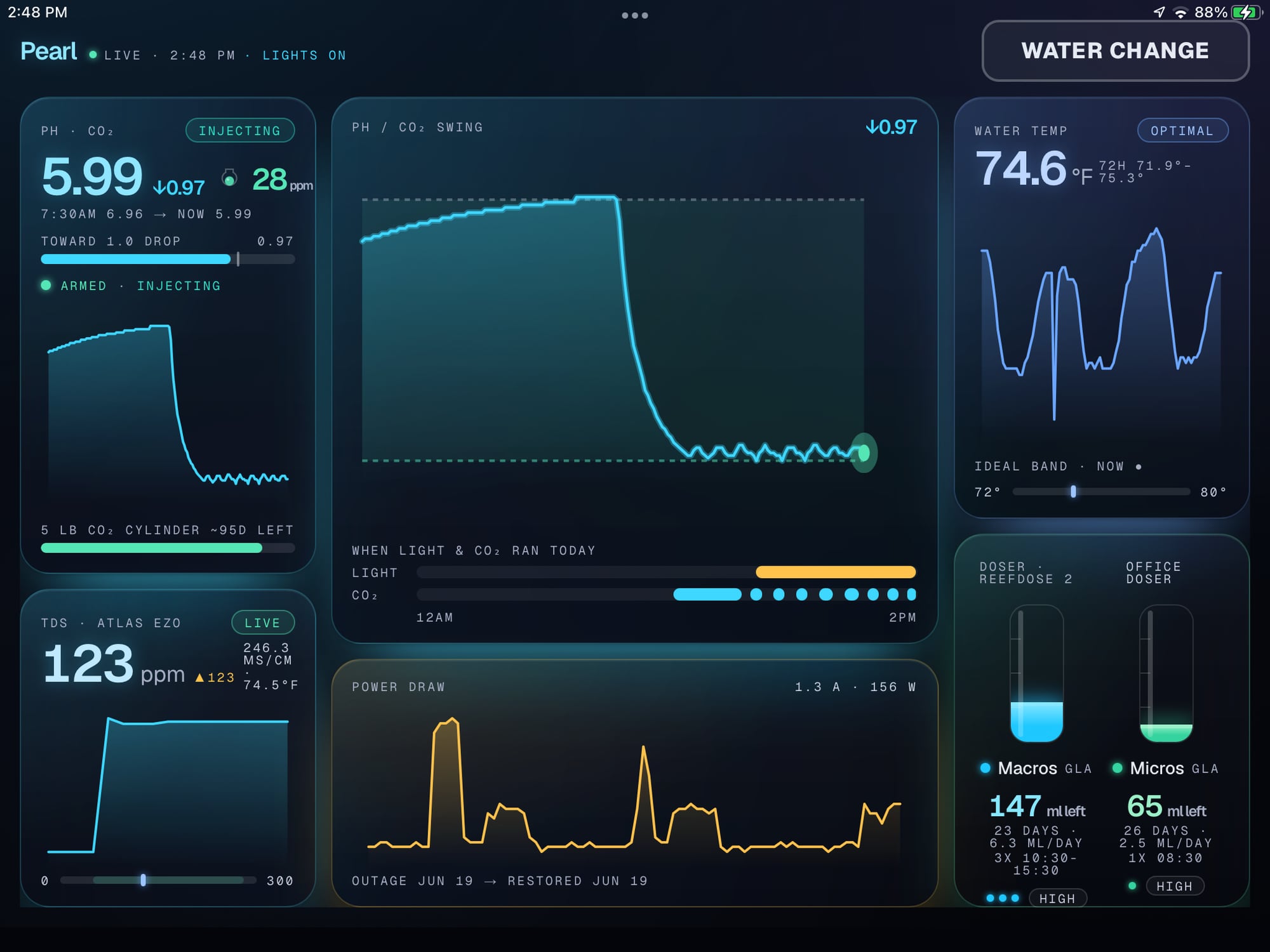
It is worth being plain about what that picture shows, because it does not match how the tank runs today. Pearl held the CO₂ loop for a while and it worked. It was still handed back to a fixed schedule: on water with almost no carbonate hardness the pH signal swings further than the dissolved CO₂ behind it, and a steady window turned out to beat a responsive one. A screenshot of a system doing something it no longer does is exactly the kind of thing a record is for.
How each system is built · Why the CO₂ loop is open · Neptune Apex
Nineteen underwater readings across the layout, taken with an Apogee MQ-510 held at each plant’s canopy rather than once under the middle of the fixture.
Measured against a practical working range for each species planted there, not one position reads below its range. Eleven sit inside it and eight sit above it, the largest by a wide margin. Whatever else this aquarium is short of, light is not it.
What the numbers do show is spread. The brightest position reads more than three times the dimmest, and the bright readings cluster in the middle of the tank. The fixture is narrower than the tank is wide, so the constraint is how far its output reaches rather than how much of it there is.
The obvious no-cost fix was to raise the fixture and widen its footprint. I tried it.
The outer readings decreased, so the fixture went back to its previous height.
The comparison was not preserved as a complete standalone survey, which means it remains an observation that changed a decision rather than a fully documented result. It will be repeated under the current logging standard.
Current
The tank is through the early establishment phase and the standing PAR survey is now reproducible. The current work is less about adding hardware and more about shaping the Dutch layout, making fertilization repeatable, and watching how plant form and coloration change as the canopy rises.
Planned work. None of this is finished, and it is listed here so the difference is visible.
Dated entries on what happened and what it changed.